
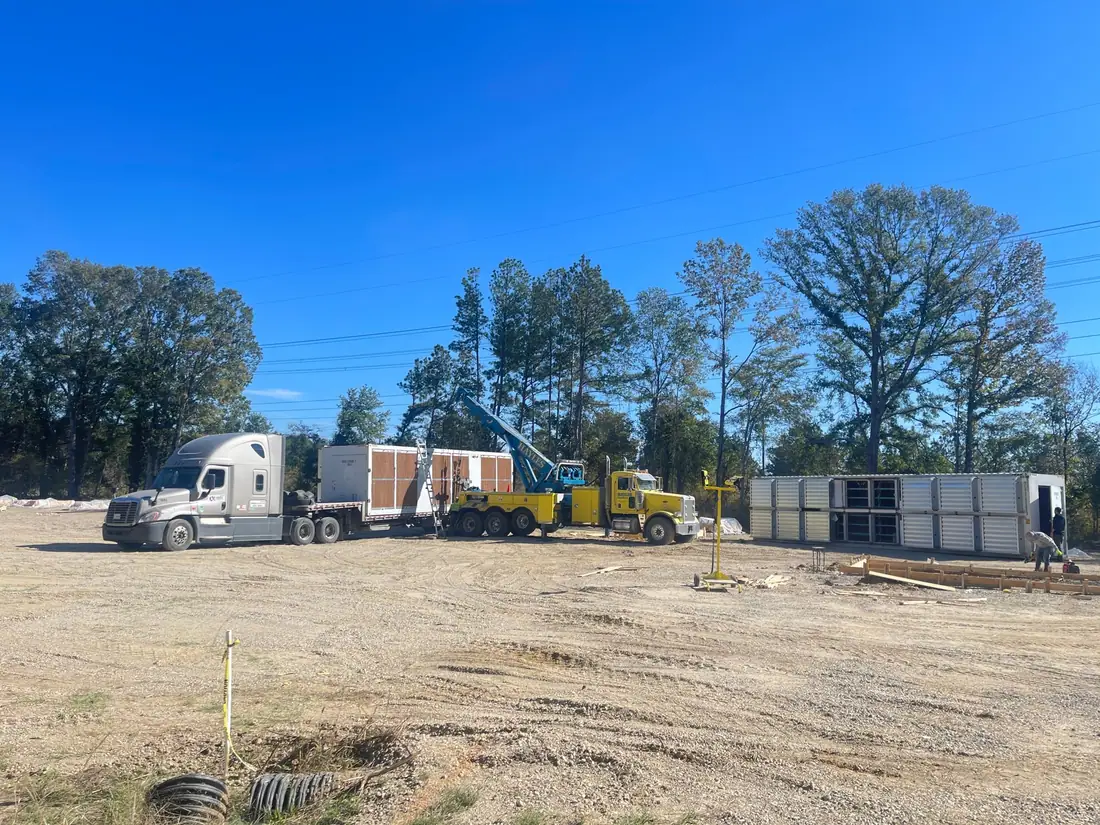
Check the complete route
- Public-road restrictions, permits, bridge and culvert limits, grades, curves, and seasonal conditions
- Private-road width, surface, shoulders, drainage, soft areas, and passing locations
- Gate width and height, turning radius, overhead wires, branches, signs, and parked equipment
Plan arrival and unloading
- Staging location if the site cannot receive the load immediately
- Traffic control, spotters, delivery window, and emergency access
- Crane, forklift or telehandler position and ground-bearing condition
- Laydown orientation that matches the installation sequence
Define the weather decision
Name who can postpone the delivery, what road or wind condition triggers the decision, where the load can wait, and how the crew and equipment schedule will be changed.