Turn the investment requirement into a project definition
K&K converts required capacity, preferred location, operating date, cost limits, and operating objectives into specific site, power, access, equipment, and delivery conditions.
K&K helps investors identify viable power and site conditions, advances projects with utilities and public agencies, and carries the work through procurement, construction, and maintenance, with design by the Engineer of Record named in the project contract.
Utilities, public agencies, designers, suppliers, logistics teams, field crews, and facility personnel work against one project definition and one delivery schedule.
K&K converts required capacity, preferred location, operating date, cost limits, and operating objectives into specific site, power, access, equipment, and delivery conditions.
K&K identifies power infrastructure and site conditions that fit the project, then explains the load, project background, schedule, and infrastructure requirements to utilities and public agencies.
Roads, drainage, foundations, structures, electrical installation, equipment access, commissioning activity, and operating handoff are planned together.
Design decisions, long-lead purchasing, site preparation, logistics planning, and crew mobilization proceed together when their dependencies are known. One recorded K&K delivery example took approximately five months where a conventional sequence would have required about one year.
K&K manages specifications, supplier orders, production, freight, receiving, staging, and installation order. The West Texas program required nearly 100 shipping containers of project materials and equipment procured and delivered by K&K.
K&K assembles the trades, equipment, materials, temporary site support, and daily field direction needed to begin work away from an established operating base.
Maintenance and operating support show where access, cooling, water, electrical systems, spare parts, and handoff information create recurring field problems. Those lessons return to design, purchasing, installation, and retrofit decisions.
The advantage is less waiting between decisions, purchases, deliveries, trades, and operating handoff.
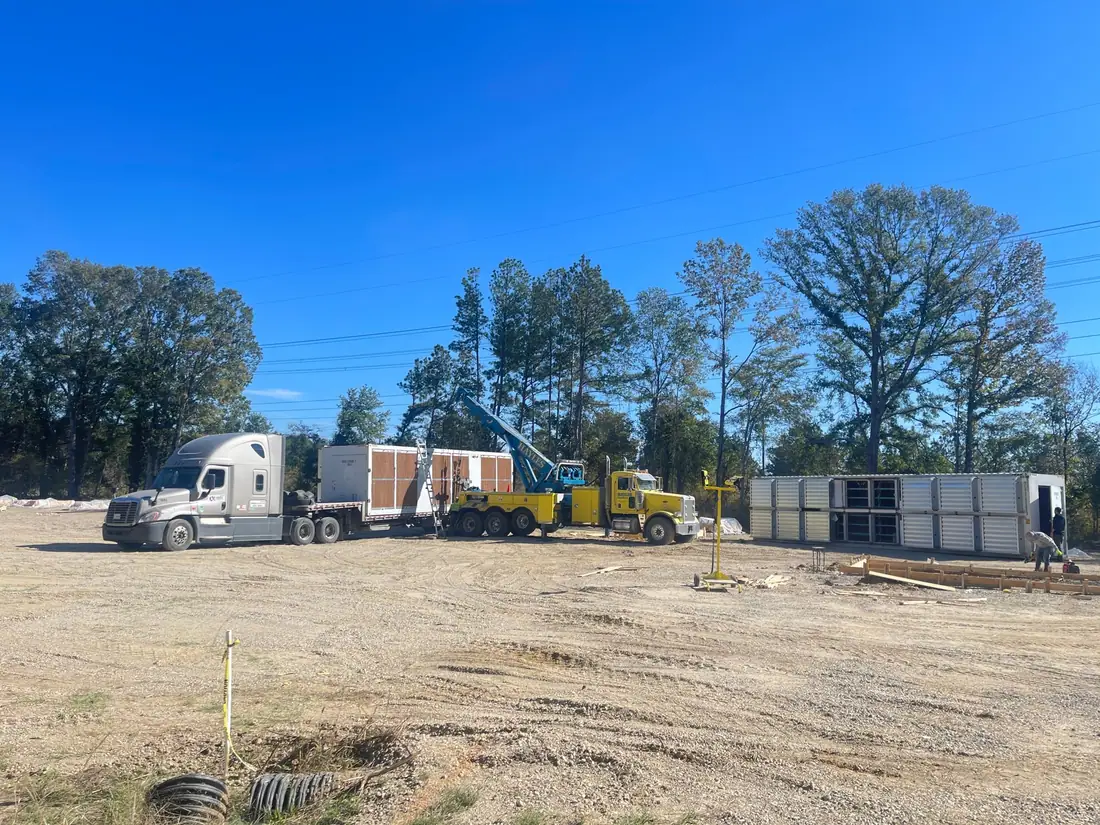
K&K's purchasing relationships cover structural steel, cooling equipment, cable, pipe, electrical components, and other project materials. Repeat orders across these materials hold K&K's place in suppliers' production schedules and in freight capacity.
The same supplier network and steel purchasing capability also support K&K's prefabricated steel homes. The residential product remains a separate business line, but it draws on the same procurement, production, freight, and field-installation resources.
Share the target capacity, preferred region, power status, schedule, equipment plan, and the conditions that currently prevent the project from moving.