
Plan the movement from carrier to final position
- Verify dimensions, weight, center of gravity, lifting points, packaging, and weather limits
- Check road, gate, turning, surface, overhead, and unloading constraints
- Assign crane, forklift, telehandler, rigging, spotters, and exclusion zones
- Reserve laydown and protected storage without blocking later deliveries
Inspect and identify at receiving
- Match the shipment to the packing list and equipment tag
- Photograph packaging condition before unloading and after placement
- Record shortages, visible damage, serial or nameplate information, and responsible contacts
- Keep components grouped by installation area and sequence
The range of material matters
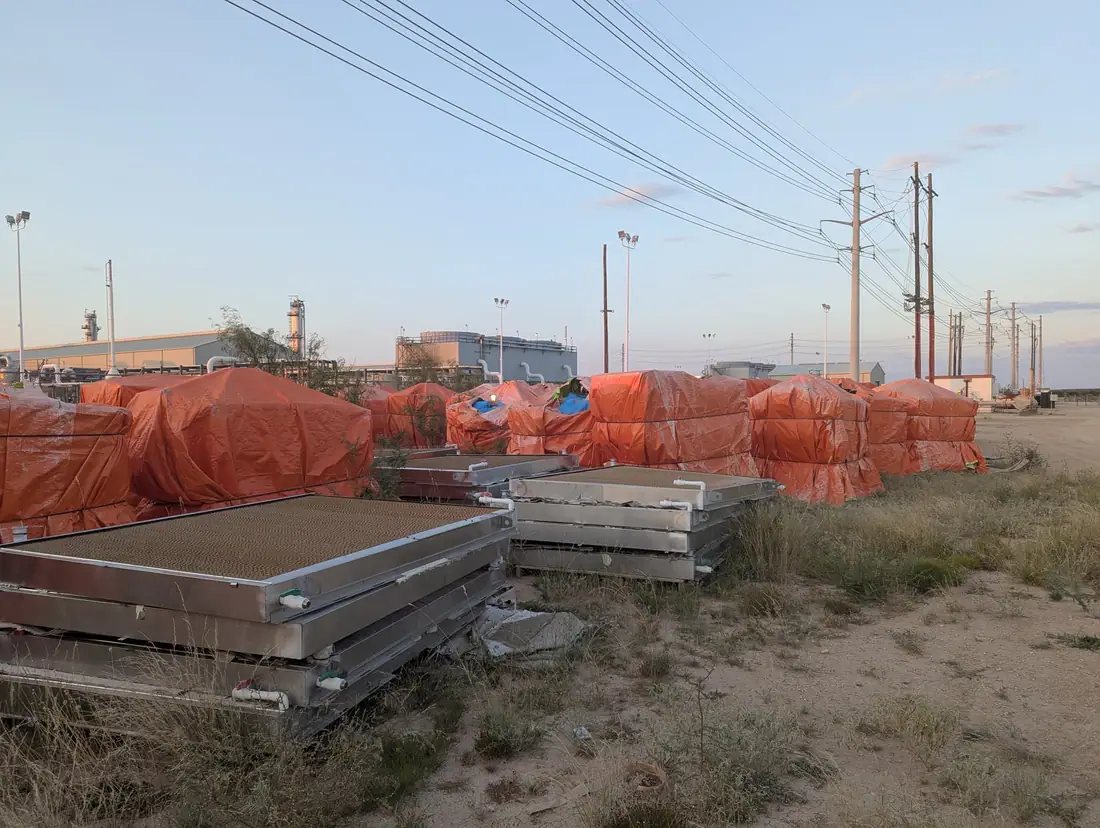
Bowie project shipping records included structural steel, cooling components, network cable, water and drainage pipe, cable tray, and safety supplies. Those materials require different protection, handling equipment, storage, and release dates.