
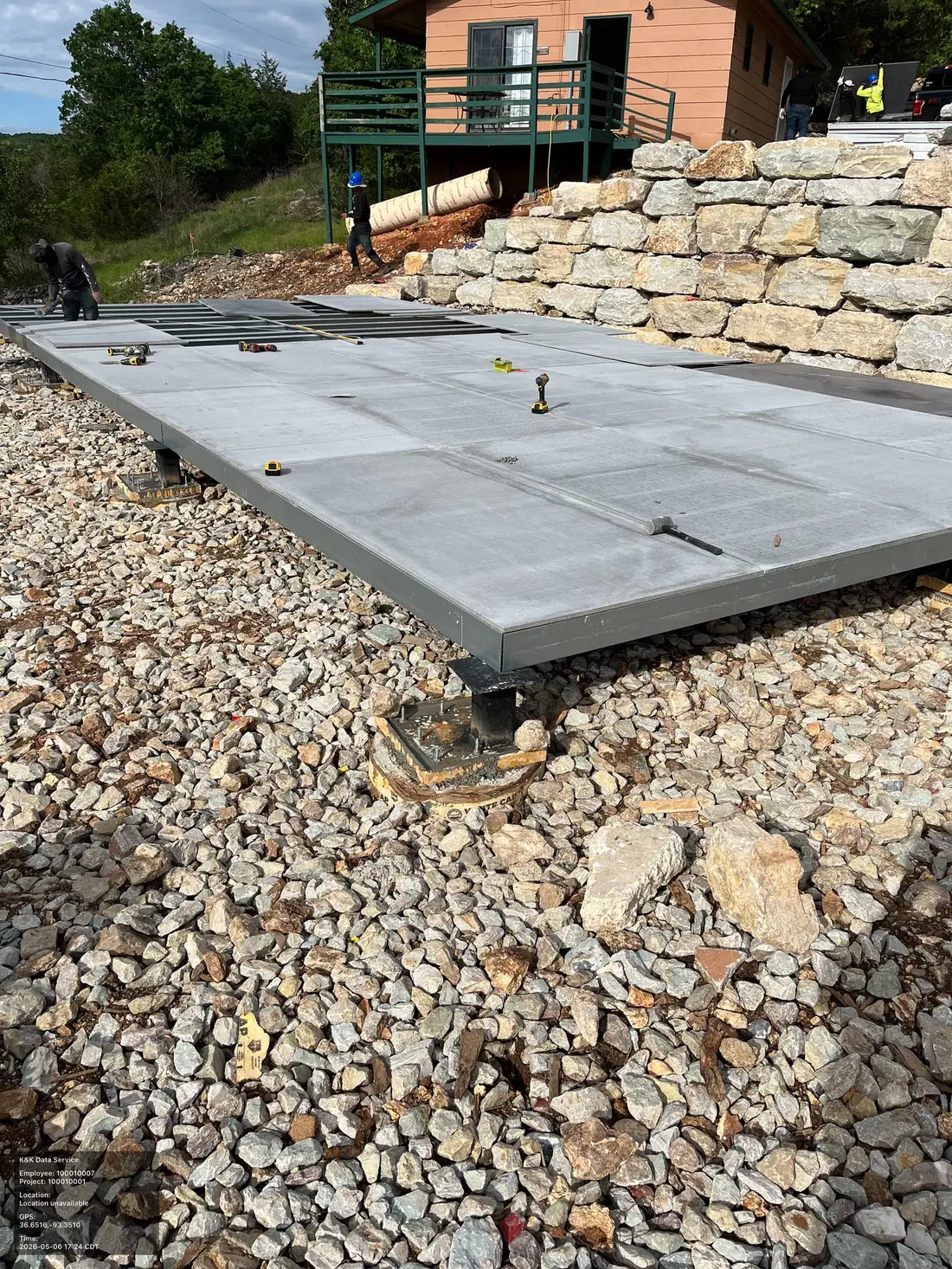
Road and unloading area
- Confirm the delivery vehicle route from the public road to the foundation
- Measure gates, turns, slopes, overhead lines, branches, and soft ground
- Reserve level unloading and lifting space outside public traffic and utility hazards
Foundation and drainage
- Complete survey, soil, structural, and local-code requirements
- Verify dimensions, elevations, anchors or embeds, curing, and access around the foundation
- Direct roof and surface water away from the house and utility entries
Utilities and inspections
- Identify electrical service, water, sewer or septic, communications, and any fuel system
- Assign trenching, sleeves, service equipment, licensed connections, inspections, and final activation
- Confirm which work is complete before placement and which work follows enclosure
Release delivery only after the site is checked
Use current photos and measured conditions to confirm road access, foundation status, utility routes, lifting space, storage, worker access, and the local inspection sequence.