
BIM Validation Checks for Data Centers: Eleven Checks From Real Audits
A validation program is a catalog of checks, each with a defined pass meaning and a record of what it has actually caught. This page lists the eleven checks our published model audits run — geometry, connectivity, content and evidence — linked to the real findings behind each one.
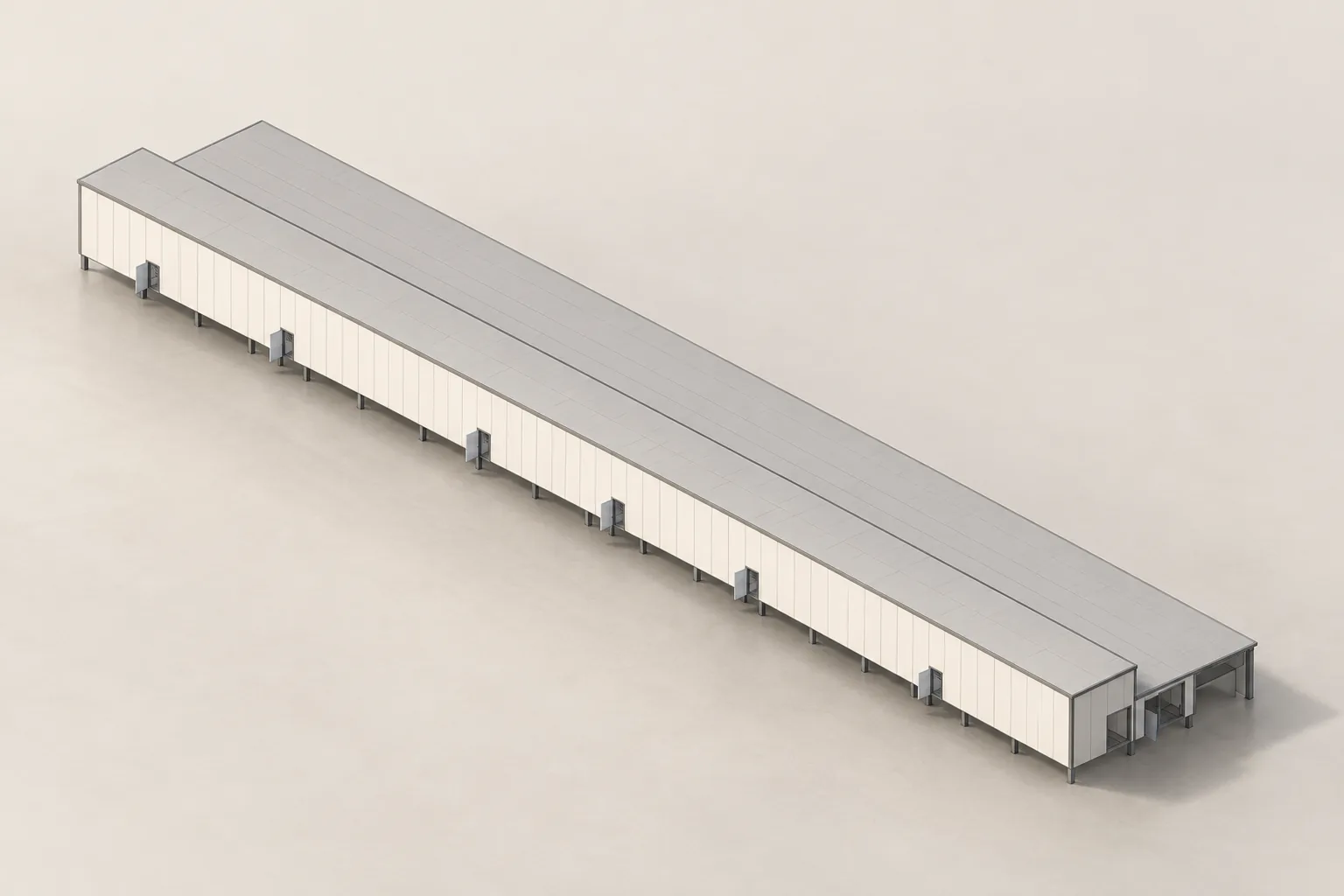
Geometry Checks: Clash Detection, With a Capability Proof
1. Clash detection. Reads solid geometry; a pass means no two solids occupy the same space under the test’s rules. Our audits add one discipline most runs skip: a zero-result run counts only after the test has shown it can find planted or known clashes. The published record carries both failure directions — thirteen real hard clashes, and a zero-result run that still was not clearance.
Connectivity Validation: the Checks Clash Detection Cannot Do
2. Connector cross-reference (AllRefs) check. Reads the native connector graph; a pass means each declared connection is closed by connector cross-references, not by geometry or metadata. Finding: 78 electrical systems, zero connector cross-references.
3. Strict edge membership check. Reads each electrical system’s membership; a pass requires exactly the two declared endpoints per edge, resolved uniquely. Finding: 78 circuits, zero strictly connected edges — in a model whose metadata-only readback had passed.
4. Port semantics check. Reads the port register; a pass means every port is a unique endpoint instance bound to its owner object, not a type code reused as a label. Finding: 1,539 ports re-registered as endpoint instances, each edge bound to exactly one allowed rule.
Content Validation: Names, IDs and Purity Gates
5. Naming-convention check. Reads names and labels against the project convention; the cheapest automated gate in the stack, and the one whose failures surface two phases later as procurement and commissioning confusion. 6. Identity-survival check. Verifies that one equipment ID survives model, BOM and commissioning, and that every output carries evidence, route and procurement labels. 7. Purity (content-standard) gate. Blocks a revision on content rules rather than geometry: revision 5 was stopped at 80 of 96 instances — not at a clash.
Evidence Validation: Readbacks, Divergence and Closure
8. Independent readback. A separate read-only validator re-derives the model’s claimed facts; a pass means the native file supports them without trusting the authoring run. 9. Criterion-divergence check. Runs a permissive and a strict criterion on the same model and publishes both; the downloadable sample pack contains a real pair — a metadata-only PASS and a strict FAIL of the same model. 10. Closure verdict. A reviewer issues gates with evidence, one allowed claim, and a forbidden-claims list — the explicit record of what may not be said of the model. 11. Human visual acceptance. Machines screen, humans accept: a model has passed every automated check and failed human review, and that split is by design.
Scope, and Checks This Catalog Does Not Yet Include
This catalog lists checks our published audits have actually run against a data center model, with their findings linked. Geometry-family checks such as clearance-zone, installation-access-zone and door-approach validation are adjacent members of the same discipline; the published record to date covers connectivity, semantics, naming, identity and evidence checks, and the catalog grows as further audit records are released. The methodology pages are collected in the BIM and Navisworks cluster, with two long-form reports on the same discipline — native-model readback and one building definition across BIM and analysis; the checks run against the published reference design models.
Download the Drawing Set
Every document is a direct PDF download — no registration, no email gate — with a published SHA-256 checksum on the downloads page:
- Electrical Drawing Book — Public Edition P1 (14 MB, 88 pages)
- Structural Document Set — Public Edition P1 (84 MB, 170 pages)
- GPU Hall Network Reference Design — Public Edition P2 (1.6 MB, 75 pages)
- Liquid Cooling Reference Design — Public Edition P1 (3.1 MB, 38 pages)
- BIM Machine-Audit Sample Pack (5 KB, 4 artifacts + README)
- Storage-Capacity Model — Companion Code (34 KB, code + dataset)
- GPU Hall Design Readiness Checklist (7 KB, 2 pages)
- Machine-Audit Template Pack (3 KB, 3 templates + README)
- Electrical + Structural + Network — Combined ZIP (97 MB, 3 documents)
Published at Design Development — Public Edition P1 status: reference designs for study and evaluation, not construction issues, not sealed by an Engineer of Record. Reuse follows the attribution terms stated inside each document.
Common Questions
What is BIM validation for a data center, beyond clash detection?
Four families: geometry (clash, with a capability-proven test), connectivity (connector cross-references, strict edge membership, port semantics), content (naming conventions, ID survival across model/BOM/commissioning, purity gates), and evidence (independent readbacks, permissive-vs-strict divergence, closure verdicts, human acceptance). Each check above links the real finding it produced.
Can BIM validation be fully automated?
Screening can; acceptance cannot. The published audits include a model that passed its automated checks and failed human visual review. The working split: machines screen every revision, humans accept with the evidence in front of them.
What does a naming-convention check actually catch?
Names and labels that drift from the project convention — the defects that cost almost nothing to fix in the model and surface two phases later as procurement and commissioning confusion. It is the cheapest automated gate in the stack, run with the identity check: one equipment ID surviving model, BOM and commissioning.
Where can I see real artifacts of these checks?
The BIM machine-audit sample pack (free, CC-BY-4.0) contains four unedited artifacts: a permissive readback that passed, the strict readback that failed the same model, a 1,539-port coverage gate, and a reviewer's closure verdict with allowed and forbidden claims.
Questions about any sheet or parameter: inquiry@kkdatasvc.com or the contact page.