
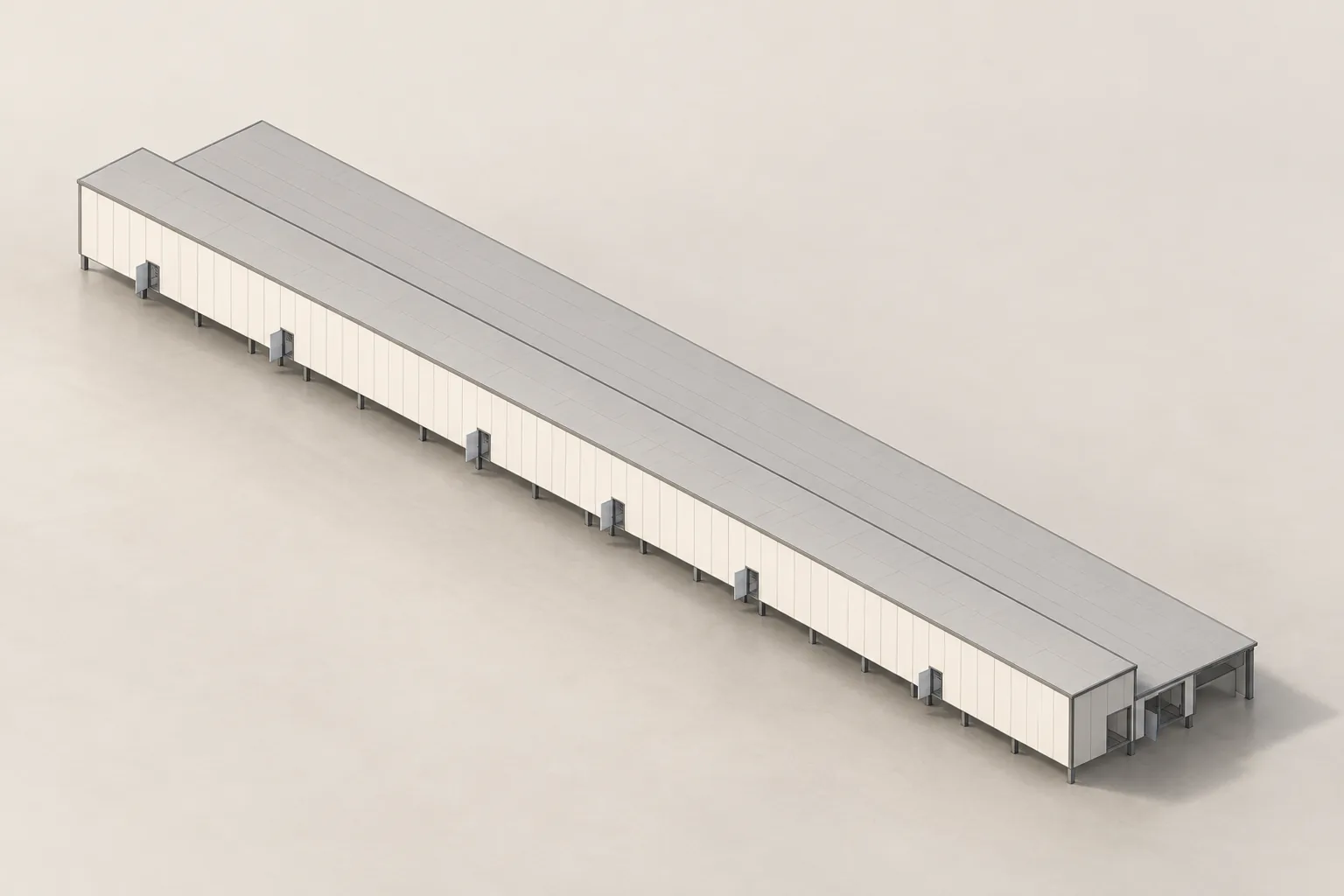
Seventy-eight attempts to join one equipment connector directly to another returned the same interface exception, seventy-eight times. The generator then built seventy-eight native electrical systems anyway. Among the five artefacts it listed at close-out, one is named as a strict read-back that failed. Direct connector cross-references number zero. The strict read-back asking whether both connectors of an edge belong to one system also returns zero [MODELED]. The pilot is graded a concept pilot. The engineer-of-record and issued-for-construction flags are both false.
Systems Join at the Device, Not the Nominated Connector
The modelling platform refuses a direct connection between two pieces of electrical equipment. The pilot therefore used the platform's circuit semantics: create a system from the precise originating connector, then add the target device to that circuit. That call joins at the device, not at the nominated connector. The platform is free to select a target connector other than the one the edge table specifies. The pilot has no read-back that could show which it chose.
Ninety-six equipment instances carry 156 balanced connectors between them [MODELED]. Every connector description is unique and names its own originating and target pair. Seventy-eight of 78 edges resolve at both ends in metadata, with no generator-side blocked edge. None of that is a connector-to-connector reference. The closure note declines to describe the seventy-eight as completed physical port connections. The paired-substation relation can be expressed through the system graph plus controlled edge metadata. It cannot be derived from connector cross-references. The independent-utility finding is unchanged.
Sixteen nodes take no part in any of the edges and carry no modelling element at all [MODELED]. The pilot classifies those as expected zero-degree nodes, not as damaged objects. A reviewer counting objects against edges would otherwise read them as a defect. The pilot was built in an isolated model, leaving the 573-object canonical file untouched [MODELED]. None of this result propagates into the register the rest of the work depends on. After the run the enabling configuration was returned to disabled, both temporary extensions were moved out of the active directory, and the modelling process was closed.
The 144 Blocked Ports Are a Queue, Not Defects
A separate closure run classifies 146 open ports across 47 objects and finds 144 of them blocked on a condition reference [MODELED]. One reason is recorded per row: the endpoint is internal, its edge is held or a template, and it requires controlled promotion before a native connection may be attempted. The other two are the upstream service demarcation, excluded because there is no internal connection to make. By execution domain the blocked set splits 76 liquid, 50 electrical, 17 fuel and 1 control [MODELED]. Every row carries the digests of the two source files it was derived from, so the classification can be re-run against the same bytes. Thirty-three distinct port tokens appear among the 146.
The coverage audit that governs the same register treats unconnected endpoints of this kind as lawful. It lists conditional branches, maintenance envelopes, replacement routes and undeveloped control, fire and network interfaces among them. It forbids closing the model with a rule that every port must be connected. The 144 are a queue. They are not a defect list.
The gate column holds 94 of the blocked endpoints behind a domain executor that has no named holder, and 50 more behind a concept-only designation recording that no engineering review has taken place [MODELED]. A later platform revision permitting connector-to-connector references would change the structural zero reported above. It would not appoint either missing decision-maker.
Limits and open items
Confirmed: independent dual utility remains false and is not derived from this run. [FACT]
Modelled and unfrozen: AllRefs direct connections are zero; the strict both-connector read-back is zero; the seventy-eight system objects may not be described as seventy-eight completed physical port-to-port connections; 78 native systems on 78 edges; 96 equipment instances and 156 balanced connectors; 16 expected zero-degree nodes; 146 open ports over 47 objects, 144 blocked and 2 excluded; 76 liquid, 50 electrical, 17 fuel and 1 control; 94 behind an unassigned domain executor and 50 behind a concept-only designation. The 573-object canonical file was not modified. [MODELED]
Open: which target connector the platform selected on any of the 78 edges; a named owner for the 144 promotions; equipment-family connectors, distribution-system settings and an Engineer of Record review of the limitation. The file is concept-pilot, partial, Engineer of Record false, issued-for-construction false. Nothing here is a connected plant. [HOLD]
Is the Strict Read-Back Still Delivered Under a Fail Name?
The useful test on the next native run is not whether 78 system objects appear in the file. It is whether the strict read-back is still delivered under a name that contains fail. If the summary leads with the 78 and drops that file, the run has been reported as a connection it did not make.
© 2026 K&K Data Service Inc. All rights reserved. Reproduction or republication is permitted only with clear attribution to K&K Data Service Inc. and a working hyperlink to the canonical URL of this article. Excerpts must preserve the technical context, maturity labels, assumptions, and limitations. No excerpt may imply project approval, field validation, certification, or endorsement that the original article does not state.
Source: K&K Data Service Inc., “BIM Electrical Systems Can Exist With Zero Connector Cross-References,” https://www.kkdatasvc.com/lab/bim-and-navisworks/78-electrical-systems-zero-connector-allrefs/.
Discuss This Constraint. If your project record shows a different result, or the same failure domain under another name, we want to see it. Email inquiry@kkdatasvc.com or use the contact page.