
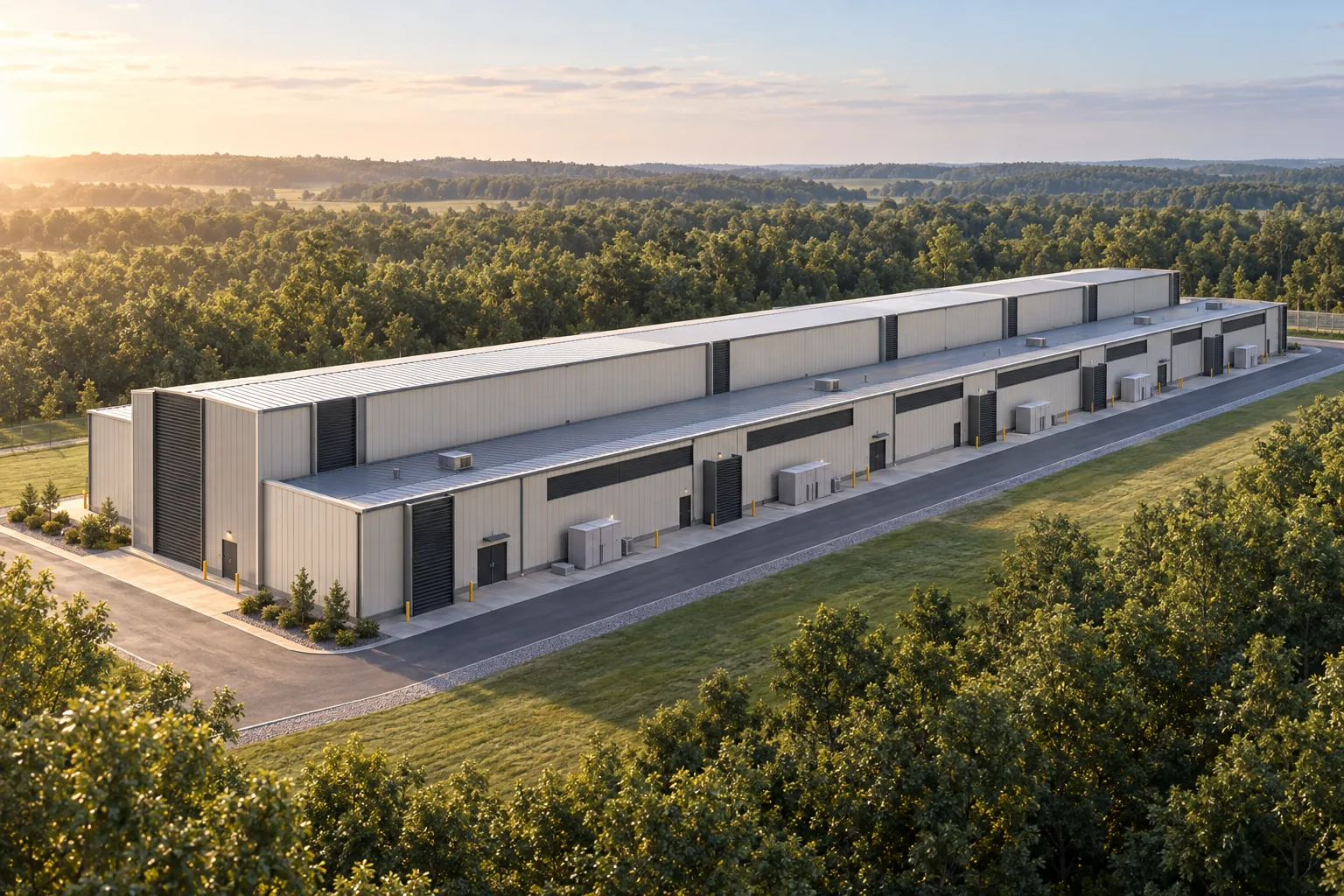
The same-day review body still said the scheme was unacceptable because it still depended on wet cooling. The boundary update attached to that review withdrew the veto, reinstated a combined dry-plus-wet source as permissible, and allowed the existing scheme to proceed. It did not spare the adiabatic route a spare spray train. Redundancy is one more unit at the granularity of the thing that fails, not a percentage added to total capacity. Because adiabatic assistance carries the whole water side in addition to the coil, it has the largest failure-object count of the three routes, so its N+1 must cover the adiabatic stage itself. Spare the dry coils, leave the spray system without redundancy, and the peak capability of the whole system returns to that of the plain dry route [MODELED]. The adiabatic summer row of the feasibility matrix must then be read as the dry row, and the verdict moves from critical to infeasible.
A Spray Failure Returns Adiabatic Summer to the Dry Row
Adiabatic pre-cooling depresses the entering dry-bulb along a constant-enthalpy line towards the wet-bulb, by an effectiveness assumed at 0.70 to 0.85 with a mid value of 0.80; full saturation is noted as theoretically unreachable [MODELED]. The gain over the dry route is about 8 K at the summer design condition and about 3 K at the annual-average condition, scaling with effectiveness multiplied by the dry-bulb-to-wet-bulb difference [MODELED]. Those two values were computed on an out-of-region placeholder weather chain later declared to carry no site validity — the proportionality survives recomputation, the numbers do not, and performance data from other sites may not be substituted for them.
Set that beside the margin. In the most permissive supply-temperature branch, the adiabatic route's summer margin is +2 K. So the failure mode is not a derate: 2 − 8 = −6 K, which is the dry route's own summer margin in the same column. Water cut produces the same reversion. The dry route already fails summer on every supply-temperature branch, so "it still runs as dry" is not a degraded mode on this project. It is a stop.
The Spray Train Is a Redundancy Object, Not a Nozzle
Load-table auxiliaries give the adiabatic stage a line of its own, and its contents explain why it is a redundancy object rather than a nozzle. It covers spray pumps, make-up boosting, water treatment, chemical dosing and side-stream filtration, at 25 kW in the baseline column, 0 kW in the annual-average column because the stage is out of service, and 60 kW in the conservative column where full-time treatment and a higher cycle-of-concentration control are assumed [MODELED]. All three are assumed figures; no supplier has returned an effectiveness, a duty or an auxiliary load for any of it.
A stage with pumps, dosing and filtration in it has more ways to stop than a finned coil does. The same table entry adds a route-level condition: if the water source or the abstraction and discharge permit proves unobtainable, this line goes to zero and the mechanical-refrigeration line rises sharply — the route disappears rather than degrades.
One row in the operability comparison sharpens the argument without adding a number. Seasonal concentration of routine maintenance is graded low for the dry route and high for the adiabatic route, for a stated reason: summer is when the adiabatic stage runs at full load and is also when it can least be taken out of service. A single spray train therefore has no natural maintenance window in the season that justifies its existence. Adding a spare coil does not cover that objection.
A shared make-up and treatment plant is also a common-cause on the primary side. Three secondary rings that do not interconnect lose that isolation the moment they drink from one water train.
Dry Main Duty Still Needs Site Hourly Weather
The boundary update then attached the work still owed: dry cooling must be shown to carry the main duty using actual site hourly weather and load, with dry-only hours, wet-operating hours, the rejected-heat share and water consumption all computed. The revision declines to set a ratio or an outdoor switching temperature itself, and states that it does not constitute equipment performance or procurement acceptance.
A dry selection point of 43 to 35 °C in 29 °C air is usable as one performance point [MODELED]. An annual dry-coverage fraction may not be derived from it. A single outdoor switching temperature may not be derived from it either.
Wet cooling may not be assumed available at any time: water shortage, treatment out of specification, freezing risk and equipment failure each require a declared supportable load, an alarm and an escalation path. Thresholds and times are still to be proposed and verified by the manufacturer against performance curves. The legacy control narrative stages one, two and three wet units at 31, 32 and 33 °C, with a five-minute transfer at 34 °C and no independent hysteresis [MODELED]. Those figures are not to be copied under new equipment names.
The revision states that it does not confirm the current three-dry, four-wet count as optimal, which makes any N+1 built on those counts provisional.
Limits and open items
Modelled and not frozen: the 0.70 to 0.85 effectiveness band, the 8 K and 3 K gains, the +2 K summer margin, the 25 / 0 / 60 kW auxiliary line, the 29 °C selection point, and the 31 to 34 °C legacy staging. [MODELED]
Open: the water source and the abstraction and discharge permit; the dry-main-duty hourly demonstration; manufacturer thresholds and times for wet entry and exit; the unit counts behind any N+1 claim; and the weather recomputation that has to reissue the 8 K and 3 K gains. [HOLD]
No route is selected. No spare train is released for purchase. No Engineer of Record has reviewed these quantities.
If the supply-temperature interface returns the most permissive branch and the recomputed site weather widens the summer margin well beyond 2 K, the adiabatic stage stops being the load-bearing element and its redundancy stops being structural. Until either is known, a spray train counted inside an N+1 claim is that claim's weakest member, and the person who has to defend it is whoever signs the redundancy schedule.
© 2026 K&K Data Service Inc. All rights reserved. Reproduction or republication is permitted only with clear attribution to K&K Data Service Inc. and a working hyperlink to the canonical URL of this article. Excerpts must preserve the technical context, maturity labels, assumptions, and limitations. No excerpt may imply project approval, field validation, certification, or endorsement that the original article does not state.
Source: K&K Data Service Inc., “Adiabatic N+1 Without Spray-Train Redundancy Reverts to Dry Cooling,” https://www.kkdatasvc.com/lab/heat-rejection-and-pue/adiabatic-n-plus-1-without-a-spare-spray-train-is-dry/.
Discuss This Constraint. If your project record shows a different result, or the same failure domain under another name, we want to see it. Email inquiry@kkdatasvc.com or use the contact page.